
















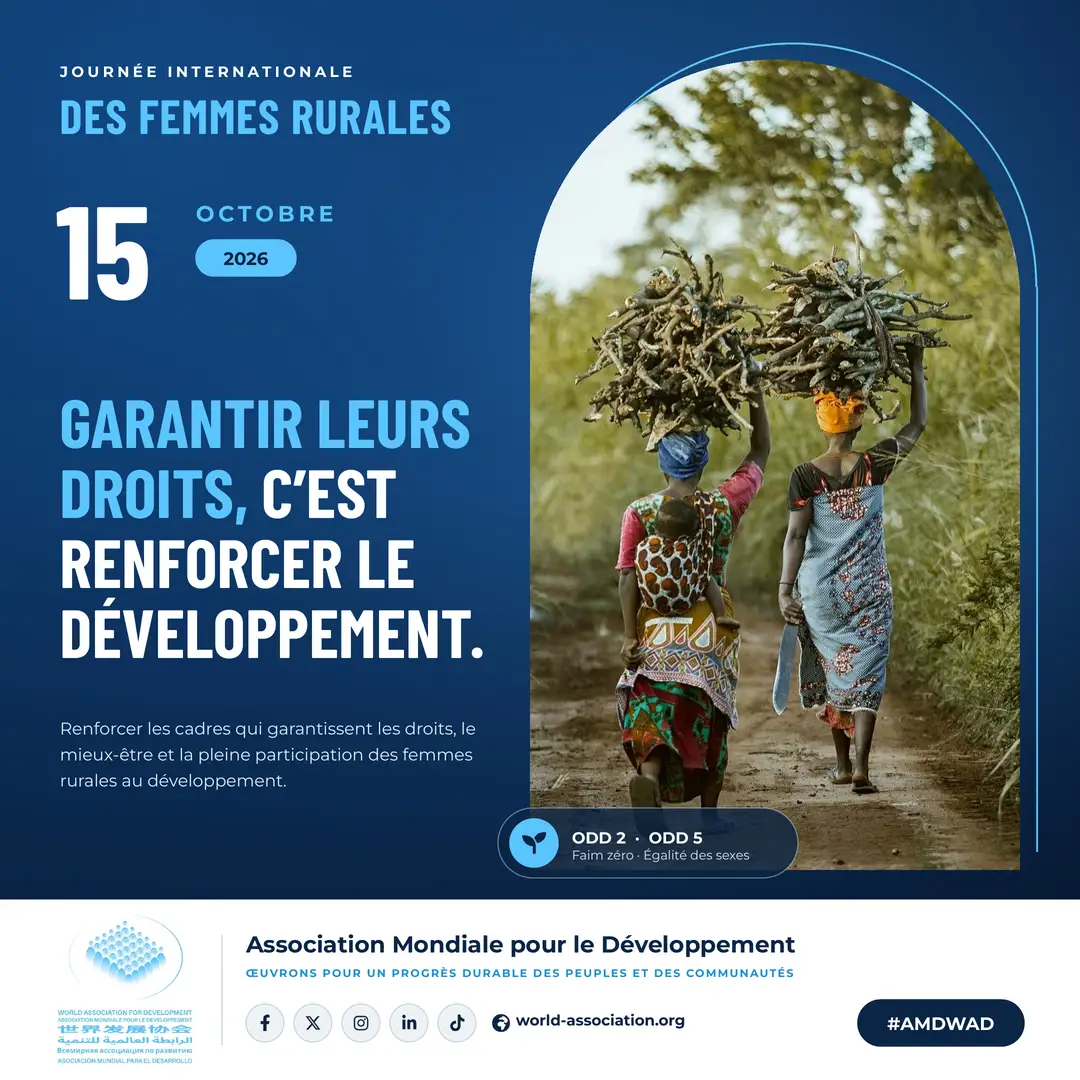
Statement by the Executive President of the World Development Association to mark International Day of Rural Women
Making the empowerment of rural women a driving force for development
Every day, rural women contribute to the economic, social and human vitality of their local areas. They produce, process and market goods; run businesses; care for their families; pass on knowledge; and help to preserve the resources on which their communities depend.
Their role extends far beyond the agricultural sector alone. It encompasses food security, the local economy, children’s education, family health, community cohesion and the ability of local communities to withstand crises.
This considerable contribution calls for one simple requirement: rural women must be able to enjoy the rights, resources and opportunities commensurate with the role they already play in development.
International Rural Women’s Day thus invites us to go beyond merely acknowledging their contribution and to examine the conditions under which this contribution can truly be transformed into autonomy, income, participation in decision-making and a sustainable improvement in living conditions.
Recognising the contribution of rural women without empowering them leaves a vital aspect of development unfulfilled.
In many contexts, women play an active role in production whilst having more limited access to land, finance, equipment, technology, training or markets.
Some farm without sufficient security of tenure over the land they cultivate. Others engage in economic activities without easy access to credit or support schemes. Many still have to travel long distances to access essential services, transport their produce or reach markets.
These constraints are not isolated from one another.
A lack of infrastructure can restrict access to markets. A lack of funding can prevent the purchase of equipment. Weak land tenure security can limit investment. Inadequate local services can increase the time spent on daily tasks and reduce the time available for training, economic activity or community participation.
Added to these difficulties is the burden of unpaid domestic and family work, which is often borne disproportionately by women.
This responsibility directly supports the livelihoods of households and communities, but it remains largely invisible in economic assessments. Yet it can limit women’s access to education, training, income or decision-making forums.
A rural development policy cannot ignore this reality.
It must take into account not only what women produce, but also the conditions under which they produce, travel, access services, fulfil their family responsibilities and develop their projects.
Environmental changes further reinforce this need.
Climate change, soil degradation, water scarcity, shifting seasons and the increasing frequency of extreme weather events directly affect rural economies. When resources become scarcer or yields decline, the consequences are felt in household incomes, food security and stability.
Rural women are often on the front line when it comes to these effects.
Their knowledge of crops, local resources, community organisation and adaptation strategies constitutes a valuable asset. However, this experience cannot realise its full potential if those who possess it remain insufficiently involved in decisions concerning agriculture, the environment, investment or land-use planning.
A region’s resilience also depends on the role it gives to those who have day-to-day knowledge of its resources, constraints and needs.
This participation must go beyond mere consultation.
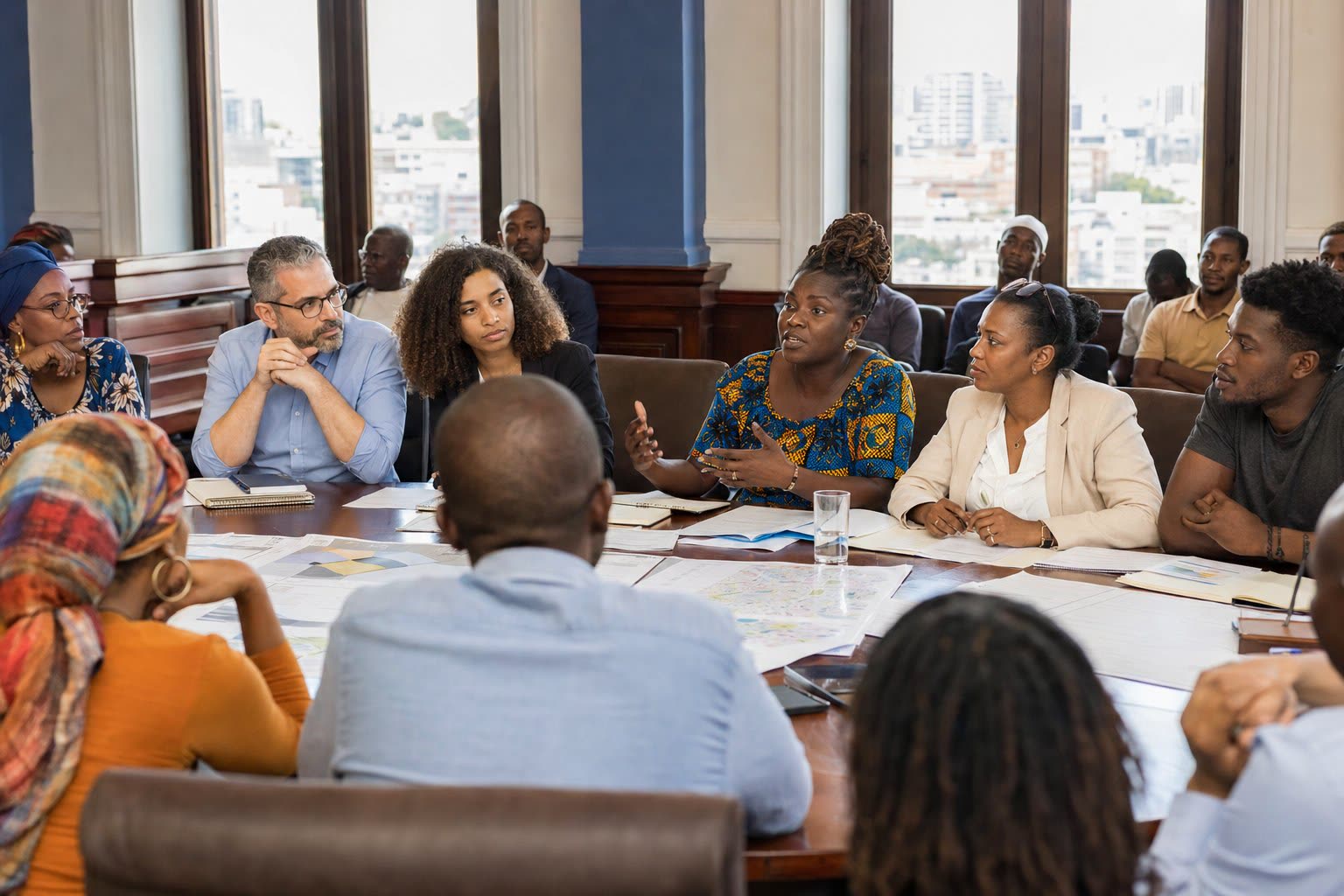
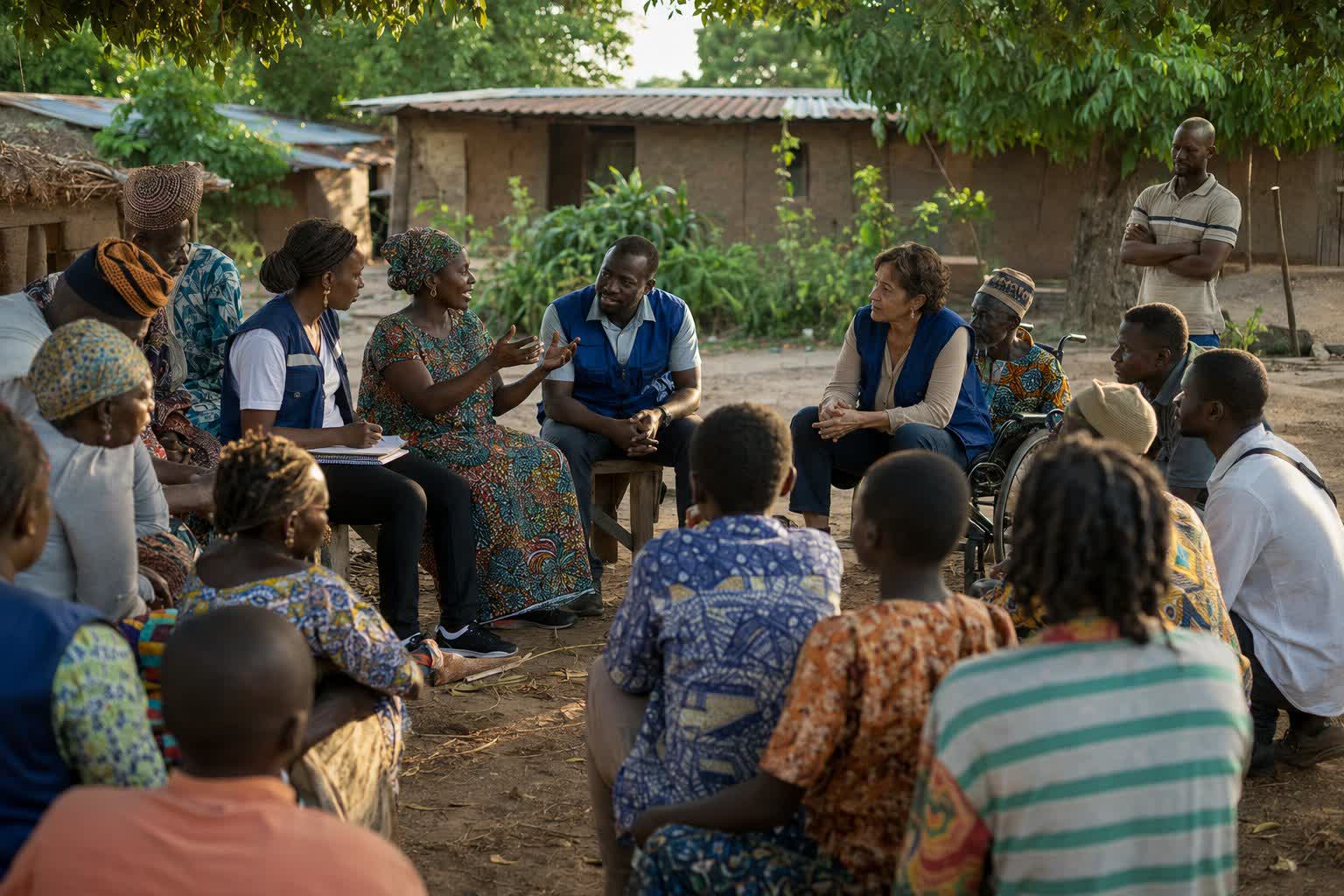
Rural women must be able to contribute to shaping the policies that directly affect their work, their incomes, their environment and their families. Their presence in professional organisations, community structures, cooperatives and local governance bodies must enable them to exert a real influence on decision-making.
This capacity is particularly important when public policies seek to modernise agricultural systems, develop infrastructure, expand digital services or transform value chains.
In this regard, technological transformation opens up new possibilities.
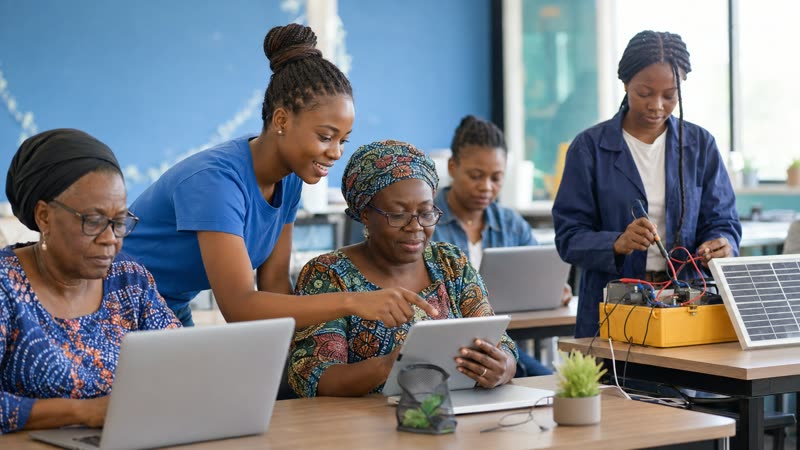
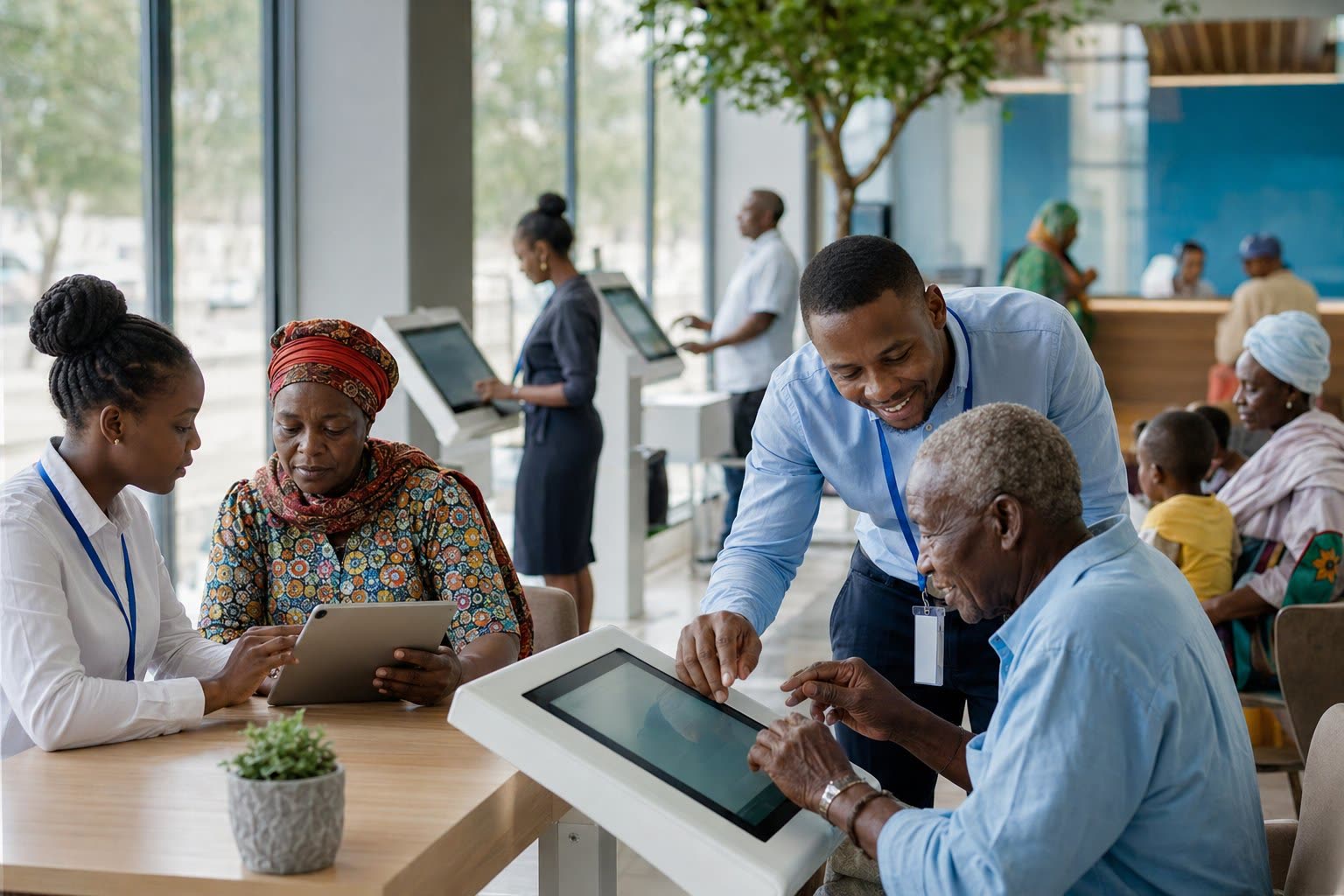
Digital tools can facilitate access to information, markets, financial services, training and data useful for production. They can bridge certain gaps and open up new opportunities.
However, their potential depends on specific conditions: digital coverage, the cost of equipment, skills, access to energy, literacy and trust in the tools used.
Innovation that is inaccessible does not reduce inequalities; it may actually reinforce them.
Digital development in rural areas must therefore be designed to include women from the outset, rather than expecting them to catch up later with changes in which they have not been sufficiently involved.
The same principle applies to value chains.
Rural women must not be confined to the lowest-paid stages of production. They must have greater access to processing, marketing, management, entrepreneurship and activities that enable a larger share of the value created in these areas to be retained locally.
This shift requires appropriate funding, accessible training, storage and processing infrastructure, better-organised markets and policies that genuinely promote women’s economic initiatives.
It also requires better social protection.
Illness, an accident, a poor harvest or a family crisis can quickly plunge a rural household into vulnerability. When protection mechanisms are weak or difficult to access, women may be forced to scale back their activities, sell off productive assets or go without certain basic necessities.
Developing rural economies therefore also requires strengthening their capacity to absorb shocks without losing the progress already made.
For the World Development Association, the rights of rural women, their economic autonomy and their participation are not separate development objectives.
They are prerequisites for development.
A woman who secures her livelihood can invest more. A woman who gains access to training can improve her production or develop a new activity. A woman who benefits from a more stable income can enhance the opportunities available to her household. A woman who participates in decision-making can help steer policies towards the needs actually experienced.
As the capacities of rural women grow, so too do the development capacities of their local areas.
This dynamic calls for shared responsibility.
Public authorities have a duty to ensure that rights are effectively upheld, to develop infrastructure and to make services accessible beyond major urban centres.
Financial institutions have a responsibility to better adapt their instruments to the realities of rural activities and the needs of women entrepreneurs.
Economic actors have a duty to build fairer relationships within value chains and to promote market access for women producers.
Finally, it is the responsibility of development partners to support solutions that sustainably strengthen local capacities, rather than multiplying one-off interventions lacking continuity.
The World Association for Development considers that the empowerment of rural women must be measured in terms of concrete results: greater security of access to resources, greater economic opportunities, more accessible services, a greater say in decision-making and a greater ability to choose one’s own path.
The challenge is not to make rural women the permanent beneficiaries of policies devised elsewhere.
It is to give them the means to become fully active participants in the transformations affecting their local areas.
The fight against poverty, food security, climate adaptation, employment, education and the development of local economies depend in part on our collective ability to remove the barriers that still limit this participation.
International Day of Rural Women thus reminds us that no region can build a sustainable future by leaving a vital part of its productive, social and human resources on the margins of resources and decision-making.
Empowering rural women is not about supporting a group on the periphery of development. It is about strengthening one of the driving forces that enable regions to produce, withstand crises and build their own future.
International Day of Rural Women
15 October 2026
Chief Executive
Hugues B. GNIMADI
World Association for Development — AMD
Let us work towards the sustainable development of peoples and communities