


















International Relief Water Program (IRWP)
Context and Rationale
The global water crisis constitutes one of the most serious and structurally significant challenges to human development today. Despite technological advances and international commitments, more than two billion people remain without access to safe drinking water, and billions more live without adequate sanitation. This situation reveals a profound divide between the proclaimed principles of the right to water and the reality experienced by entire populations, particularly in rural, isolated, and climate-vulnerable areas. Water scarcity is no longer a local or sectoral problem: it has become a major driver of health vulnerability, persistent poverty, forced migration, and geopolitical tensions.
This crisis stems from structural and cumulative causes. Demographic growth, ecosystem degradation, industrial and agricultural pollution, and climate variability are durably altering hydrological cycles. In many regions, water governance remains fragmented, weakly institutionalised, and insufficiently funded, preventing sustainable and equitable resource management. The consequences are severe: preventable water-borne diseases, significant economic losses, heightened food insecurity, and the erosion of social cohesion. At the global level, the financing deficit in the water sector far exceeds the current capacity of the most vulnerable States, rendering SDG 6 targets unachievable without a collective and structured response.
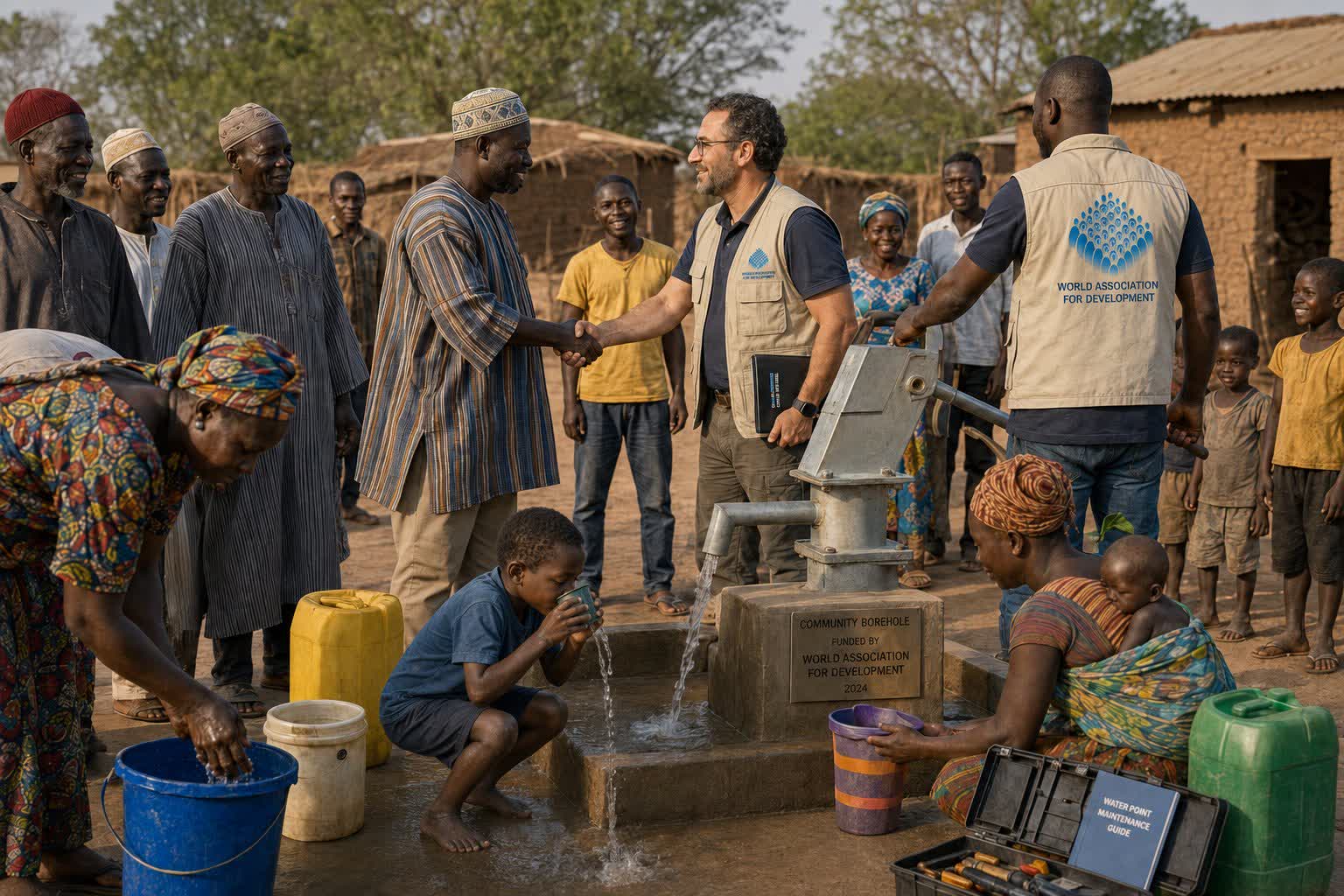
It is in this critical context that the International Relief Water Program (IRWP) finds its full strategic relevance. The program responds to a major strategic gap by proposing a comprehensive, long-term, and genuinely international approach to water access. It transcends the logic of dispersed projects or emergency interventions to situate the water question within a systemic vision integrating governance, international solidarity, climate resilience, and social equity. By placing water at the heart of human development and societal stability, the IRWP constitutes a structural lever to transform access to water into an effective right an indispensable condition for peace, public health, and sustainable development at the global scale.